
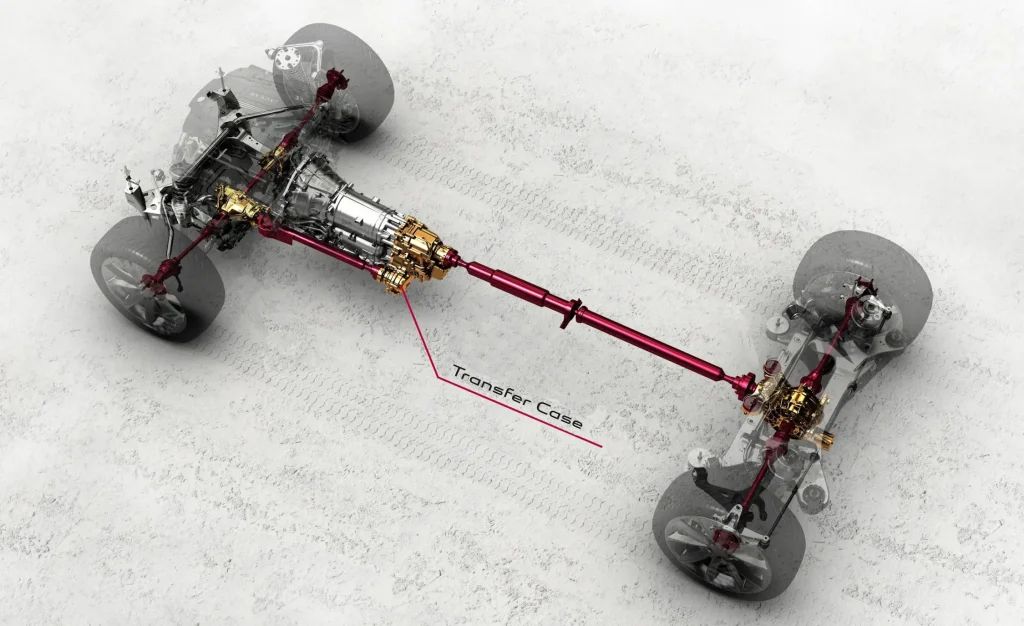
an intermediate gearbox in 4WD or AWD vehicles that distributes power from the transmission to both the front and rear axles, allowing all four wheels to drive and improving traction and control
It improves grip and control by sending power to all four wheels, helping the vehicle perform better on slippery or uneven surfaces
It allows smooth switching between driving modes, ensuring reliable performance on both roads and rough terrain.
By balancing power distribution and reducing drivetrain stress, it extends component life when properly maintained.
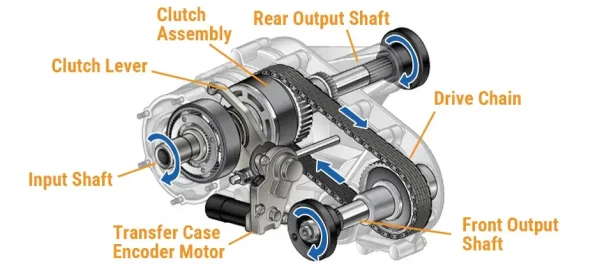
Durable cast iron or lightweight aluminum housing for strength and efficiency.Compact design saves space and improves installation flexibility.Strong spur gears and quiet helical gears for reliable performance.
Available in both remote and direct mount options.Efficient oil pump system for smooth forward and reverse operation.Combined lubrication system for long service life in harsh conditions.Optional features include differential, park brake, and PTO compatibility.No need for additional oil coolers.Multiple yoke and flange options available.Easy front axle engagement, supporting automatic systems.
1. Why is there fluid leaking?
Leaking often happens when seals wear out or dry up, causing fluid loss and poor lubrication that can damage internal parts.
2. Why is it hard to shift between 2WD and 4WD?
Difficulty shifting usually comes from worn gears, damaged shift forks, or a failing shift motor.
3. What do grinding or whining noises mean?
These sounds often signal internal wear or lack of lubrication—usually from damaged gears, bearings, or chain components
1. How often should the fluid be changed?
Regular fluid changes prevent contamination and reduce wear, helping the system run smoothly.
2. What should I do if I see a leak?
Inspect and fix it immediately. Early repair prevents severe damage and costly replacements.
3. How should I handle unusual signs or noises?
Don’t ignore them—get the system checked promptly to avoid larger mechanical failures.
1. How can I extend its lifespan?
Maintain proper fluid levels, avoid excessive off-road stress, and follow recommended service intervals.
2. What happens if I delay repairs?
Minor issues can quickly escalate, leading to expensive damage to gears or motors.
3. How do I ensure reliable performance?
Routine maintenance, early troubleshooting, and professional inspection keep it running efficiently.